BODY COMPOSITION · 03
Strength Training After 40: Start With Capacity, Not Ego
Starting strength training after 40 is not about proving you are still tough. It is about building a body that can handle work, family, travel, stairs, bags, long days and the life you want to keep living.
Many people return to training after a long gap and try to pick up where they left off. Others see somebody lifting heavy online and feel they need to do the same. That is where ego can quietly turn a useful plan into one that is too hard to repeat.
I prefer to start with capacity: what your body and routine can do, recover from and repeat now.
The short version
- After 40, strength training can start from your present capacity, not from your younger self or someone else's numbers.
- Capacity includes your movement skill, training history, sleep, health context, schedule, recovery and equipment access.
- Choose simple, repeatable resistance work before chasing impressive loads or exhausting workouts.
- Progress when the current work is performed well and still leaves room to recover and live normally.
- For fat loss, strength work can support the quality of the process. It is not a promise that every kilogram lost will come from fat.
Starting after 40 is not about proving toughness
Forty is not a physiological cliff. You do not suddenly need a special metabolism solution the day you turn 40. But for many adults, life is different by then. Work is heavier, family responsibilities are real, sleep can be inconsistent and training may have stopped for years.
That is why I do not begin with the question, “What is the hardest workout you can survive?” I begin with, “What can you do well enough to come back and do again?”
Regular physical activity matters at every adult age. World Health Organization guidance includes muscle-strengthening activity that involves the major muscle groups on two or more days each week. That is public-health guidance, not a ready-made programme for every person. [1]
The useful starting point is to choose a dose that respects your real situation. A plan that fits a condo gym, a small space at home or two consistent sessions around a busy Penang work week can be more valuable than a perfect programme that never gets repeated.
What I mean by capacity
Capacity is your current ability to perform, recover from and repeat useful training.
It includes more than strength. I look at your movement experience, time away from training, confidence with equipment, work schedule, sleep, current health context, equipment access and how much recovery your week can actually support.
Two people may be the same age but need completely different starting points. One may have trained regularly and only needs a sensible return. Another may be restarting after years away, with long drives, children, poor sleep and no confidence in a commercial gym. Neither person needs to be shamed. They need a starting point they can use.
That is the difference between capacity and ego. Ego asks what looks impressive. Capacity asks what creates a useful next session.
Start with repeatable movement patterns, not a perfect programme
You do not need to collect the most complicated exercises before you start. You need resistance work that you can understand, perform with reasonable control and repeat.
For one person, that may mean a squat-to-box pattern, a supported row, a press, a carry and a simple hinge pattern. For another, machines may be the best first option because they make a busy commercial gym feel less intimidating. At home, bands, dumbbells, body-weight variations and a stable bench can also be useful.
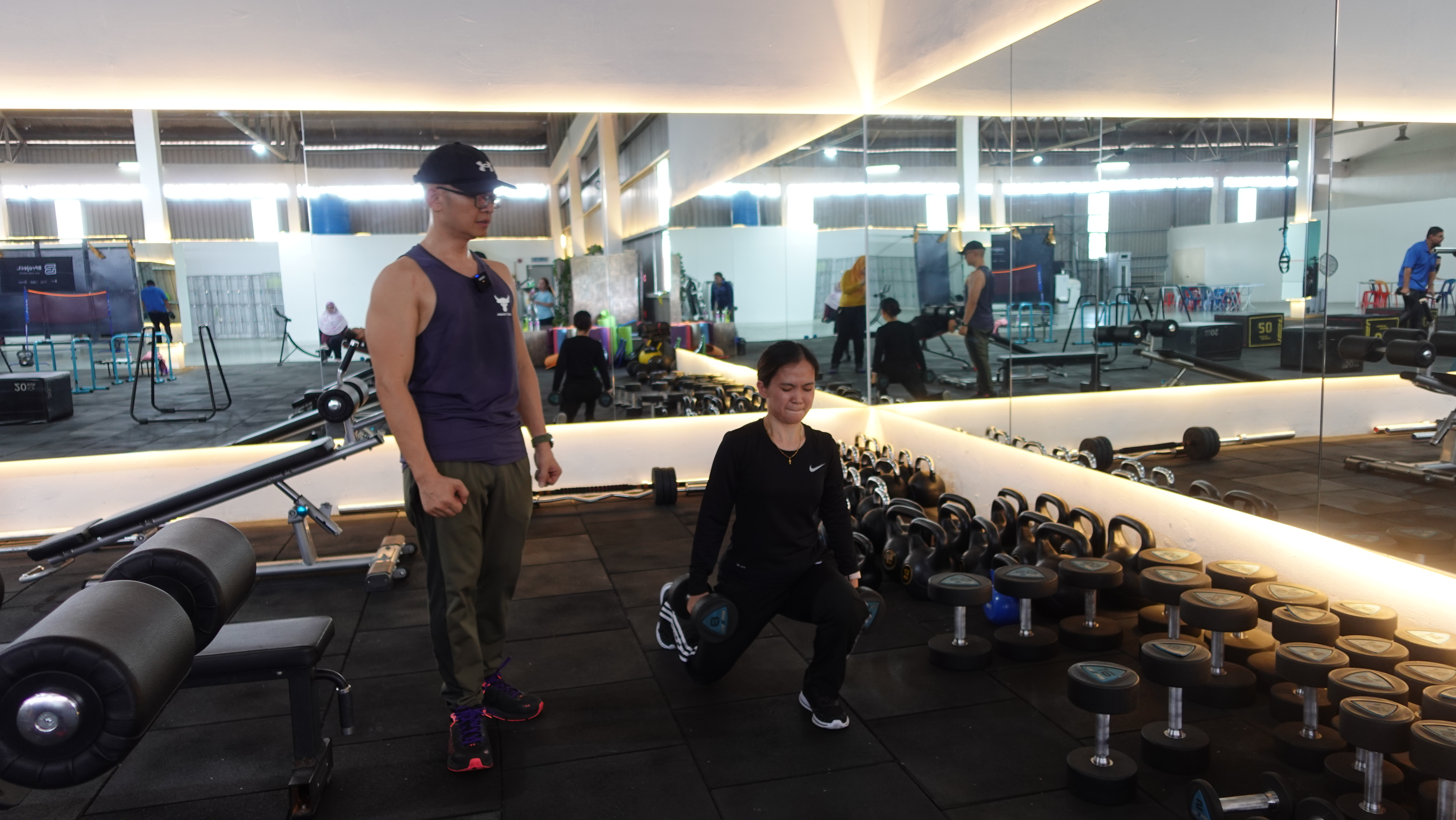
The exact exercises, load and volume are coaching decisions. They depend on the person in front of me. I am not interested in making a first session look advanced. I am interested in helping someone learn a pattern well enough that the next session is realistic.
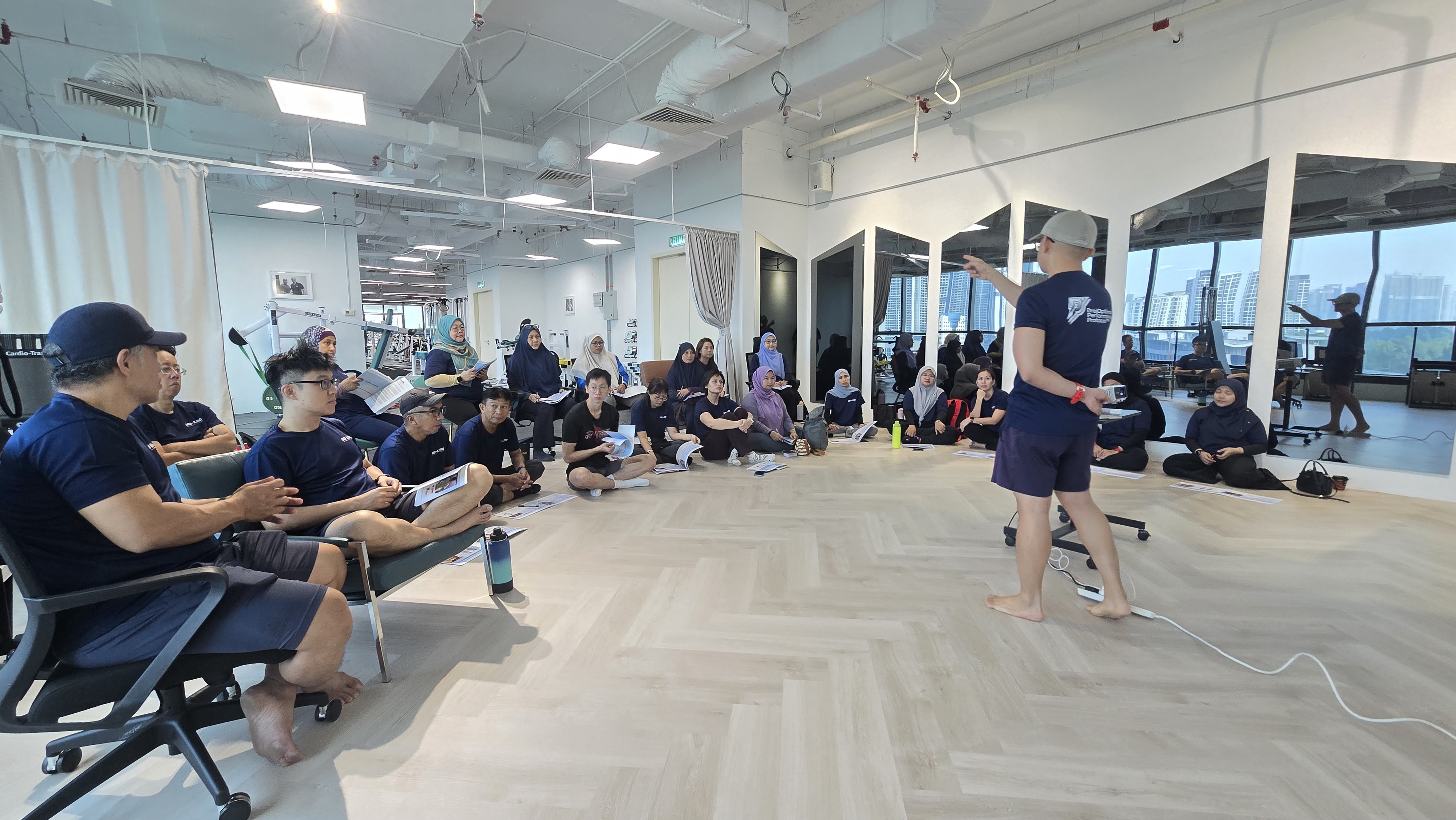
Technique matters because it helps you use a movement consistently and notice when something needs to change. It does not make training injury-proof. Good coaching also means keeping the plan simple enough that a person can remember it without turning every workout into an exam.
Choose a training dose you can recover from
The first few weeks do not need to leave you destroyed. Extreme soreness is not proof that training worked. A punishing first week can make the next session less likely, especially when work, family and sleep are already demanding.
I would rather start with a manageable amount of work, then review how it feels over the following days. Can you sleep? Can you do your job? Can you move normally? Can you return and perform the session with reasonable control?
This is not an argument against working hard. It is an argument for earning harder work through consistency. The American College of Sports Medicine has long described progression as something that should reflect training status, goals and the work currently being tolerated. [4]
For some people, two short sessions a week is a sensible beginning. For others, one coached session plus a simple home session may be more realistic. The right answer is not a universal template. It is the smallest useful dose you can perform well enough to repeat.
Progress when the current work supports it
Progression does not only mean adding weight. It can mean improving control, using a fuller comfortable range, adding a repetition, choosing a slightly more demanding variation or simply completing the planned sessions consistently.
I look for a few things before changing the plan:
- Is the technique still reasonably controlled?
- Is the person recovering between sessions?
- Is the routine being followed most weeks?
- Is the next session approached with confidence rather than dread?
If those answers are not there yet, adding more may not be the smart move. We can simplify, reduce the demand, choose a more suitable variation or give the person more time to learn the current work.
Resistance training can improve muscular strength and physical function in older populations, but this does not mean every adult over 40 will respond in the same way or on the same timeline. [2] A study in very elderly adults also shows that improvement remains possible later in life, but it is not a template for every 40, 50 or 60-year-old reader. [3]
Strength work can support better fat-loss decisions
When fat loss is one of the goals, resistance training has a job beyond calorie burn. It gives the plan a reason to protect useful physical capacity while food intake is being adjusted.
Research comparing dietary weight loss with and without resistance exercise generally finds that resistance work can help attenuate loss of measured fat-free mass. That is an average research finding, not a guarantee that someone will preserve all skeletal muscle or see the same body-composition result. [6]
The practical question is still the same: can you keep training with enough quality and recovery to make the plan useful? If you are trying to interpret fat loss beyond the scale, read Losing Fat Without Losing Muscle: What a Good Fat-Loss Plan Should Protect.
Home, condo-gym and commercial-gym training can all work
A commercial gym is not the only place to build strength. Home-based resistance training can be a viable option for some community-dwelling older adults, especially when travel, family care or access are barriers. The research does not say that home training is identical for every person or goal. [5]
For Malaysian adults, the practical choice may change from week to week. A home workout may make more sense during a busy family period. A condo gym may be enough for a simple routine. A commercial gym can give access to machines, more loading options and coaching. The best setting is the one that helps you train consistently and safely within your circumstances.
Do not let a lack of perfect equipment become a reason to do nothing. Start with what is available, then build from there when the routine is stable.
When to pause and get suitable input
Normal training effort can include breathing harder, tired muscles and short-term fatigue after work you are not used to. It is worth reviewing the plan when training causes persistent or concerning pain, new symptoms, unusual changes that worry you, or when the work is repeatedly overwhelming recovery and daily life.
Significant medical conditions, recent surgery, rehabilitation needs or uncertain symptoms deserve suitable input from an appropriate healthcare or rehabilitation professional. That is not a failure of motivation. It is part of making a sensible decision.
My coaching principle
After 40, you do not need to train like you are trying to win an argument with your younger self.
Start from capacity. Choose work you can repeat. Build technique and recovery into the plan. Progress when the current work is being done well. That is how strength training becomes part of your life instead of another short-lived restart.
FAQ
Is it too late to start strength training after 40?
No. Age 40 is not a cut-off point. Your starting point should reflect your present capacity, health context and training history. Research in older populations supports the potential for improvements in strength and function, but the pace and outcome are individual. [2][3]
How often should I strength train when I am starting?
WHO guidance includes muscle-strengthening work involving major muscle groups on two or more days a week. [1] Your own starting frequency should still fit your current capacity, recovery, schedule and confidence. A smaller repeatable start may be more useful than a demanding plan you cannot sustain.
Can I build strength at home?
Home-based resistance work can be a viable option for some people, particularly when travel or access makes gym training hard. [5] The equipment and approach should match your experience and goal. Home training is not automatically the same as every gym-based option.
Should I lift weights while trying to lose fat?
Resistance training can have a useful role during dietary weight loss by helping attenuate average loss of measured fat-free mass. [6] It does not guarantee that all muscle will be maintained, so look at training quality, recovery, body-weight and waist trends together.
How do I know whether my starting programme is too much?
Review whether you can perform the work with reasonable control, recover between sessions and continue your normal life. Extreme soreness, falling training quality, dread, poor sleep or repeated inability to complete the plan can mean the dose needs review. No single sign proves the answer on its own.
What is the difference between normal training effort and a problem that needs assessment?
Hard breathing, tired muscles and short-term fatigue can be normal responses to unfamiliar work. Persistent or concerning pain, new symptoms, recent surgery, rehabilitation needs or significant medical conditions should be assessed by an appropriate healthcare or rehabilitation professional.
References
- World Health Organization. Physical activity guidance.
- Fragala MS, et al. Resistance Training for Older Adults: Position Statement From the National Strength and Conditioning Association.
- Azevedo et al. Effects of Resistance Training on Muscle Size and Strength in Very Elderly Adults.
- Kraemer WJ, et al. ACSM Progression Models in Resistance Training for Healthy Adults.
- López et al. Unsupervised Home-Based Resistance Training for Community-Dwelling Older Adults.
- Binmahfoz A, et al. Resistance Exercise During Dietary Weight Loss.

About Coach Ho Yah Wen
Coach Ho Yah Wen is the Founder and Master Coach of HO-LIAO FITNESS in Penang, Malaysia. He focuses on sustainable fat loss, body composition and strength training.